Table Of Content
Cold, wet climates also promote mildew and mold, which can eat away at the bags. If you build an earthbag home in a damp environment, ensure that your fill material is completely dry before filling your bags. You will also need to ensure proper drainage away from the structure.
Building The Structure
And if your earthbags are only going to serve as infill between load-bearing members (like a timber frame), then you can stray even further from this ideal. Earthen architecture, however, offers several sustainability and health advantages. Because the primary construction material, raw clay soil, is usually located directly on the building site, earthen architecture has a very low embodied energy footprint. Earthen architecture can incorporate passive solar design to reduce artificial heating and cooling requirements. Earthen houses also protect interior air quality, and when partnered with mineral and earthen plasters, will not emit any VOCs into your home. Earthbag homes are more eco-friendly than traditionally built homes that use less sustainable building materials.
When to Pinch Pennies and When to Pay for Quality as a Homesteader
Long or short sandbags are filled with moistened earth and arranged in layers or long coils. Strands of barbed wire are placed between each layer of sandbag to act as both mortar and reinforcement. Stabilizers such as cement, lime, or asphalt emulsion may be added.
Earthbag construction
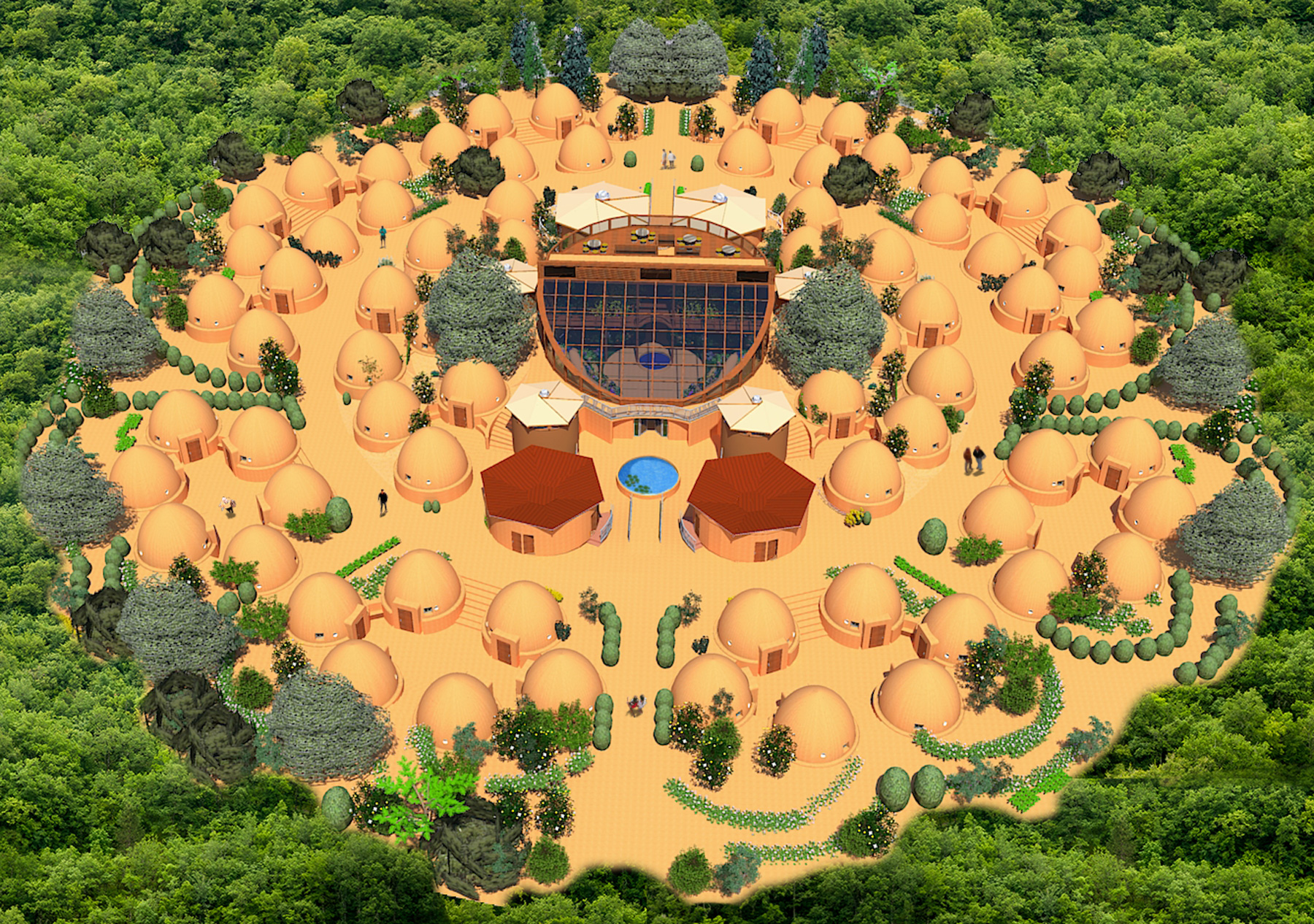
Before you start piling earthbags pell-mell in your backyard, learn the challenges of earthbag construction next. Earthbags can be used as infill for a more conventionally framed home, but for this section, we'll look at how to build an earthbag dome. Walls built of earthbags are about 15″ thick, including the plaster. For example, a 6×12′ wall is 72 square feet and will take 288 earthbags to construct. This is an estimate and will vary on the size of the bags.
How Earthbag Homes Work
Similar to how a potter stacks coils of clay to make a vessel, builders stack coils of earth for make a structure. This not only saves more energy (and pollution), but also helps save our forests, which are increasingly necessary for sequestering carbon. Building with earthbags (sometimes called sandbags) is both old and new. Sandbags have long been used, particularly by the military, for creating strong, protective barriers, or for flood control. The same reasons that make them useful for these applications carry over to creating housing.
How to Build an Earthbag House (and Why You Should)
Earthbag homes use simple and sustainable materials with several advantages over traditional building materials. This particular home is built from straw bales, but they use a similar method to earthbags. Instead of filling bags and placing them in the barbed wire, they place straw bales instead. As you can see, the process is quite simple, although labor intensive.
Earthbag Home Construction Timelapse Videos
This is usually done through the use of temporary wood forms that are placed in the wall. The bags are built up and around these frames and once the structure is finished, the forms are removed. "We decided on a SuperAdobe dome because we wanted to learn a new earth-building style, and had great contacts in the area with lots of experience building earthbag structures," they say. "We organized a workshop together and brought friends from all over North America to help and learn. Still, even if a bank is interested, there might be other difficulties.
Introduction: How to Build an Earthbag Roundhouse
Subsoil is the clay/aggregate soil that’s below the topsoil. You could dig your own, but you can buy it very inexpensively and save many days of hard work. You can also buy an engineered mix called road base, which contains the ideal ratio of clay to aggregates, no mixing required.
How to Deal with Coyotes Around the Homestead
Also, it is absolutely breathtaking to see how they designed it. Though it appears different, it has a gorgeous finish to it. Geiger uses a sheet metal slider when placing the bags to prevent them from snagging on the wire and ripping open.
To facilitate the process, you will want to make a bag stand that holds the bag upright, open, and in the correct location on the wall. Once filled to 6 inches from the top, fold over the top of the bag and put it in its place (which should be right where it was filled). The polypropylene bags are typically more easily obtained and cheaper to purchase.

This boils down to simply screwing the door and window frames to the bucks so they are plumb and level. Our websites at EarthbagBuilding.com and Earthbag Building Blog explain just about everything you need to know for free. My new Earthbag Building Guide and Earthbag Building DVD are now available. With global temperatures continuing to rise because of global warming, the construction industry must use the lowest carbon footprint building materials available. We look into the carbon footprints of 5 common building materials. However, plumbing and electrical installations can sometimes prove challenging due to the thick earthbag walls.
As bags are filled, they can be sewed closed with twine, but this isn't required. An alternative would be to place the open end of the bag, folded in with neat corners, against the sealed end of the adjoining bag. Tightly placing the bags keeps them closed and ensures the wall's structural strength. Bags should be placed so that the places where the bags on the previous row meet are covered by the bags on the subsequent row, just like brickwork. In the 1970s, Iranian architect Nader Khalili was working in the countrysides of Iran, teaching villagers how to make their adobe homes solid by a process that was like firing clay in a kiln. You have the potential to build a beautiful, sleek home with curved walls and unusual shapes.
With trees disappearing, Malawi turns to "earth bag" houses - Thomson Reuters Foundation
With trees disappearing, Malawi turns to "earth bag" houses.
Posted: Wed, 06 Jul 2016 07:00:00 GMT [source]
The roundhouse has a super strong feeling due to the concrete bond beam, thick walls, sturdy poles and round shape. Once the bags are built up to a suitable height, the roof is constructed. In this case, the roof consists of a metal ring with radiating wood poles covered in thatch. In cold climates, thicker, insulated roofing material can be built instead of thatching. Roof overhangs are helpful to reduce plaster waterproofing requirements, although plaster on lower walls may be stronger and more water-resistant than plaster on upper walls.
The materials also make the home naturally fire-resistant and able to withstand extreme damp and dry climates equally well. CalEarth is engaging in ground-breaking research and education that fundamentally transforms housing equity worldwide. Solid-weave polypropylene is most popular, available around the world to transport rice or other grains. Polypropylene is low cost and resists water damage, rot, and insects. Tubes are often available from manufacturers who sew them into bags. Mesh tubes of soft crocheted poly fibers are also used, although stiff extruded mesh or woven mesh bags can also be used.
Earthbag Construction Tag - ArchDaily
Earthbag Construction Tag.
Posted: Wed, 09 Apr 2014 07:00:00 GMT [source]
Quirks and faults in your earthbag house plan will most likely cause problems during building and, ultimately, could waste your entire investment. The goal of this project was to create a home using recycled & sustainable materials and to be as self-sufficient as possible. Light is provided by a solar panel that charges a battery. Let’s say you are someone that is really concerned about your safety and the future.
Allow to dry several days before stripping the forms and building the roof. Any voids in the concrete can be patched when you plaster. This is why many eco-conscious builders and homeowners are turning toward sustainable building materials like earthbags in preference to more traditional, less environmentally friendly approaches. You don't have to go all the way to the moon or California to find an earthbag structure. Earthbag homes are a way to build a house with natural materials that are literally right in your own backyard. We'll look at the benefits of earthbag construction on the next page.



No comments:
Post a Comment